

Bank statements reveal more than account balances. They show how money enters a business, whether revenue arrives consistently, and how quickly available funds disappear. For lenders, these details are essential when evaluating cash flow, repayment capacity, and potential financial misrepresentation. The challenge becomes greater when applicants submit several months of bank statements, sometimes covering multiple accounts. Manual reviews can identify these problems, but they require time and consistent attention. Automated bank statement analysis addresses these challenges by converting financial documents into structured transaction data and identifying patterns that warrant closer examination. This guide explains how lending teams can detect anomalous deposit activity across multiple statements, prioritize suspicious files, identify doctored PDFs, and improve underwriting efficiency without sacrificing oversight.
Why Anomalous Deposit Detection Matters in Lending
An anomalous deposit is a credit transaction or pattern that differs significantly from an account's expected financial behavior. Not every unusual deposit indicates fraud. A seasonal retailer may receive substantially more revenue during the holidays. A contractor might receive a large payment after completing a project. However, unexplained deposits can also distort an applicant's financial position.
Potential risks include:
- Inflated revenue: Loan proceeds or internal transfers are incorrectly classified as operating income.
- Unstable cash flow: Large deposits conceal extended periods of insufficient balances.
- Unverified funding sources: Significant credits arrive from unfamiliar counterparties.
- Undisclosed borrowing: Merchant cash advances temporarily increase available funds while creating repayment obligations.
- Document manipulation: Transaction amounts or balances have been altered to improve the applicant's apparent financial condition.
The Financial Crimes Enforcement Network (FinCEN) recognizes unusual changes in transaction size, frequency, and behavior as potential indicators requiring additional investigation. For underwriting teams, the objective is not to treat every irregularity as fraudulent. It is to distinguish ordinary business variation from activity that materially affects lending risk.
How Automated Multi-Statement Bank Analysis Works
Effective anomaly detection begins with organizing financial information across the applicant's entire submission. A typical process involves five connected stages.
1. Extract Transactions From Bank Statement PDFs
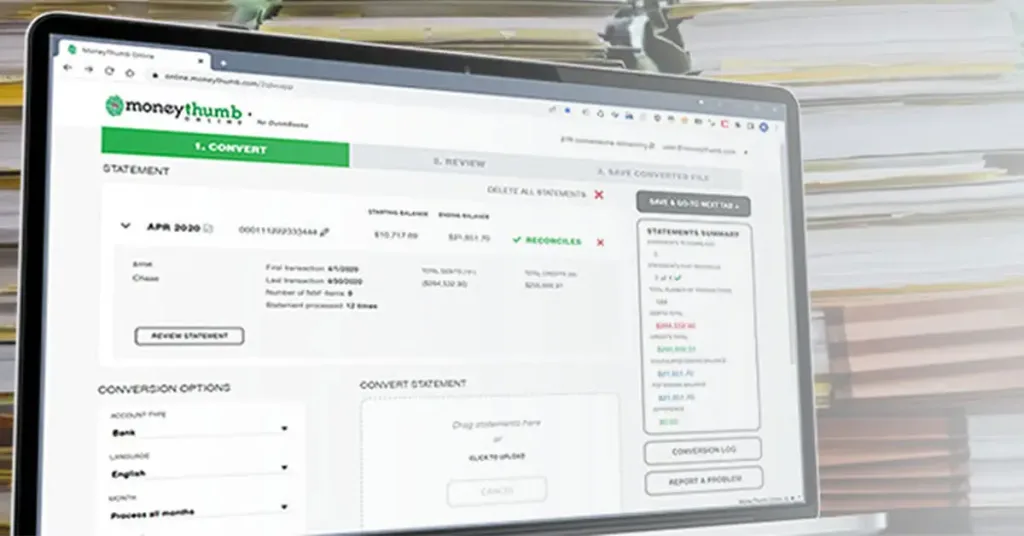
The system extracts transaction dates, descriptions, deposits, withdrawals, and account balances from submitted documents. Modern parsing systems use document recognition and structured data extraction to accommodate variations in bank statement layouts. When analyzing scanned PDFs, optical character recognition (OCR) may be required. Because OCR can misread characters and amounts, extraction confidence and reconciliation checks remain important.
2. Standardize the Financial Data
Banks use different date formats, transaction descriptions, and debit-credit conventions. Automation should normalize these differences into a consistent transaction structure while preserving the original values for verification. It should also identify overlapping statement periods, distinguish accounts, and prevent duplicate transactions from inflating financial totals. For example, two uploaded statements covering the same account and month should not automatically count as two months of revenue.
3. Build a Historical Deposit Baseline
Once transactions are standardized, the system establishes an expected financial profile. Useful baseline measurements include monthly deposit totals, deposit frequency, average transaction size, recurring payers, and the proportion of revenue generated by each source. Analyzing several statement periods helps identify whether unusual activity represents a sustained change or a temporary event.
4. Identify Deviations and Inconsistencies
Anomaly detection rules compare incoming deposits against historical behavior. A sudden increase in deposit volume, an unfamiliar high-value payment, or a sharp change in deposit timing may trigger further analysis. Multiple indicators occurring together generally provide stronger investigative context than a single unusual transaction.
5. Generate Reviewable Risk Findings
The final stage converts analytical results into actionable findings. Instead of merely labeling an application suspicious, the system should explain what changed, when the activity occurred, and which transactions support the finding. This approach makes automated analysis useful for credit decisions rather than producing unexplained alerts.
Best Methods for Detecting Abnormal Deposit Patterns
Different financial irregularities require different analytical techniques. A reliable underwriting process combines several methods rather than relying on a single threshold.
Detect Sudden Deposit Spikes
A significant increase in deposits may suggest business growth, seasonal demand, or an unusual funding event. Consider a business that typically receives $45,000 in monthly deposits but suddenly reports $105,000. The increase deserves investigation, particularly if it occurs immediately before a financing application. Automated systems can compare the latest period against rolling historical averages and identify transactions responsible for the difference. However, historical averages alone may be misleading for seasonal businesses.
Analyze Deposit Frequency and Timing
The timing of transactions can reveal patterns that monthly totals conceal. A business receiving customer payments throughout the week has a different cash-flow profile from one receiving several large deposits near month-end. Automated analysis should examine deposit intervals, recurring payment dates, concentration around reporting periods, and changes in established payment schedules. Repeated deposits of nearly identical amounts may also warrant closer inspection when they are inconsistent with the business model. Unusual timing is a reason to ask questions, not proof of misconduct.
Identify Unusual Deposit Sources
The source of funds matters as much as the amount received. A merchant may report substantial deposits that originate from business owners, affiliated accounts, financing companies, or other noncustomer sources. These credits can increase total deposits without representing earned revenue. Source analysis should classify transactions using descriptions, counterparty information, recurring patterns, and available supporting records. It should also distinguish customer payments from financing proceeds and account transfers. This creates a more meaningful picture of recurring operating income.
Detect Deposit Concentration
A business that depends heavily on one payer may face greater cash-flow risk if that relationship changes. Automated systems can calculate the percentage of revenue attributable to individual deposit sources and monitor that concentration over time. For example, a borrower whose largest payer previously represented 25% of identified revenue might warrant additional review if that share increases to 70%. The increase may be legitimate, but underwriting teams should understand the dependency before determining repayment capacity.
Reconcile Deposits With Account Balances
A healthy deposit total does not necessarily mean the business maintains sufficient liquidity. Accounts may receive substantial credits but repeatedly fall below zero or reach critically low balances between deposits. Underwriters should evaluate average daily balance, minimum balance, negative-balance days, and balance volatility alongside deposit activity. A sudden deposit followed by an equally large withdrawal may also require examination to establish whether the funds were retained or merely passed through the account.
How Chief Credit Officers Can Automatically Triage High-Risk Bank Statements
For a Chief Credit Officer, automated document triage should answer one practical question: Which applications need immediate human attention, and why? An effective workflow separates routine processing from potentially serious financial or document-integrity concerns.
Establish Risk-Based Review Categories
A lender can organize applications into three review categories.
| Risk category | Typical indicators | Recommended action |
| High | Strong document-tampering evidence, material reconciliation failures, or major unexplained deposit inconsistencies | Urgent manual review before a credit decision |
| Medium | Unusual deposit spikes, unfamiliar funding sources, or significant cash-flow volatility | Targeted review and supporting-document requests |
| Low | Consistent financial patterns, reconciled balances, and no material unresolved alerts | Continue through standard underwriting controls |
These categories are illustrative. Each lender should establish thresholds based on its credit policy, risk appetite, and historical outcomes.
Apply Multiple Risk Signals
A robust triage process considers several factors simultaneously:
- Document authenticity and extraction quality
- Transaction and balance reconciliation
- Historical deposit consistency
- Revenue-source reliability
- Existing debt repayment patterns
- Unusual account activity
For instance, a revenue spike accompanied by a new financing deposit and unusually high withdrawals deserves more attention than an isolated increase in customer sales. The system should preserve each contributing indicator so analysts understand the reason behind the assigned priority.
Route Exceptions to the Right Team
Document-integrity findings may require fraud investigation, while unusual revenue patterns may be better handled by credit analysts. Automated routing should assign cases to appropriate reviewers and capture the resolution. High-risk findings should not trigger automatic rejection solely because an anomaly model produced an alert. Human review remains necessary to distinguish legitimate explanations from material concerns.
Best Tools and Techniques for Detecting Doctored Bank Statements
A bank statement can appear visually convincing while containing modified figures or fabricated transactions. Therefore, checking deposit behavior alone is insufficient. Lenders also need document-level fraud detection.
Examine PDF Metadata and Structure
PDF files may contain information about their creation, modification, and producing software.
Unusual modification history or evidence of editing tools can raise concerns about document authenticity. Additional indicators include inconsistent fonts, irregular spacing, unexpected text placement, or broken document structures. However, metadata cannot independently establish fraud. Legitimate merging, conversion, or scanning processes can change file properties.
Perform Visual Document Analysis
Visual inspection can detect differences that ordinary text extraction overlooks. Potential indicators include altered transaction rows, inconsistent background textures, misaligned figures, and irregular formatting within the same statement. Advanced document-analysis systems can supplement structural inspection with image-based assessments. These techniques are particularly useful when edits have changed the visible appearance without leaving obvious inconsistencies in extracted text.
Verify Transaction Arithmetic
Financial statements should reconcile mathematically. For a complete statement period, the basic relationship is:
Opening Balance + Deposits − Withdrawals = Closing Balance
The same principle can be applied to reconstructed daily balances. If the reported balance cannot be reconciled with the transaction history, the discrepancy requires investigation. Some statements contain adjustments or special transaction conventions, so reviewers should confirm the bank's presentation rules before concluding that a mismatch indicates manipulation.
Compare Independent Records
When concerns remain unresolved, underwriters should request original bank-generated statements or independently verified account information through an authorized channel. Comparing independently obtained records with applicant-submitted PDFs can reveal missing transactions, altered amounts, or unexplained discrepancies. No individual forensic indicator guarantees authenticity. The strongest verification approach combines document examination, transaction reconciliation, and independent confirmation.
Detecting MCA Stacking and Misclassified Revenue
Merchant cash advance (MCA) activity creates additional complexity when lenders evaluate business deposits. A merchant may receive advance proceeds that resemble substantial business revenue at first glance. If those proceeds are included in operating income, the borrower's apparent repayment capacity may be overstated. Stacking occurs when a merchant maintains advances from multiple funding providers simultaneously. Automated analysis can help identify this activity by examining recurring withdrawals, recognizable funding counterparties, repayment schedules, and incoming advance proceeds. For example, a business might receive a $60,000 advance while making daily repayments to two existing providers. The incoming funds temporarily improve the account balance, but the new obligation may increase pressure on future cash flow.
Automate Routine Extraction and Calculations
Staff should not need to manually enter hundreds of transactions or calculate monthly deposits repeatedly. Structured extraction can generate transaction totals, balance trends, and revenue summaries before an analyst begins evaluating the application. This allows underwriting teams to concentrate on interpretation rather than data entry.
Review Exceptions Instead of Every Transaction
A well-designed system highlights significant irregularities while preserving access to the complete transaction history. For example, an underwriter reviewing four months of statements can focus on an unusual deposit increase, a suspected advance, and a reconciliation discrepancy instead of reading every transaction sequentially. This exception-based approach can reduce repetitive review work while preserving analytical depth.
Integrate Analysis Into the LOS
Connecting bank statement analysis with a loan origination system (LOS) can reduce duplicate data handling. An integrated workflow can receive documents, return structured financial metrics, attach risk findings, and route cases for review. Before implementation, lenders should evaluate API compatibility, data mapping, access permissions, error handling, and audit requirements. They should also confirm how the system handles incomplete submissions and unsuccessful document parsing.
Measure Efficiency Without Ignoring Accuracy
Useful performance indicators include:
- Average time spent reviewing each application
- Percentage of files requiring manual escalation
- Rate of false-positive fraud alerts
- Frequency of corrected extraction errors
- Time taken to resolve flagged transactions
- Percentage of applications with complete audit records
These measures help lending departments determine whether automation is improving decision quality as well as processing speed.
Frequently Asked Questions
What is the best way to detect abnormal deposits across multiple bank statements?
Combine historical deposit comparisons, transaction categorization, revenue-source analysis, and balance reconciliation. This helps identify unusual activity while distinguishing customer revenue from transfers, financing proceeds, and other nonoperating credits.
Can AI detect doctored bank statement PDFs?
AI-assisted systems can identify potential manipulation through document structure, metadata, visual inconsistencies, and transaction checks. However, suspicious findings require verification because legitimate document processing can produce similar indicators.
How can a Chief Credit Officer prioritize high-risk statements?
Use automated risk triage to flag serious document-integrity concerns, unexplained deposit changes, reconciliation failures, and material debt discrepancies. Route higher-risk applications for targeted manual investigation.
Why should lenders analyze several months of bank statements?
Multiple statement periods reveal recurring revenue patterns, seasonal changes, account volatility, and funding activity that may not be visible in a single month. They also provide context for evaluating unusual deposits.
How does automated bank statement analysis improve underwriting?
It reduces manual extraction, standardizes financial calculations, identifies potential irregularities, and directs reviewers toward transactions that require attention. The result is a more consistent process with better visibility into financial risk.
Conclusion
Accurate deposit analysis requires more than calculating the amount of money entering an account. Lenders must determine where funds originate, whether deposits are recurring, how balances behave, and whether the submitted statements can be trusted. Automated multi-statement analysis brings these questions into one structured review process. Ultimately, effective automation does not remove the need for underwriting judgment. It gives credit teams clearer evidence, stronger consistency, and more time to investigate the financial risks that matter most.














Add comment