

A merchant cash advance (MCA) gives businesses quick access to working capital by advancing funds against future sales instead of offering a traditional loan. Approval focuses more on business cash flow than credit scores, making MCAs a popular option for small businesses that need fast funding. Modern technology, including AI-powered financial analysis and automated bank statement processing, has also made MCA underwriting faster and more accurate.
What Is a Merchant Cash Advance?
Many small businesses face temporary cash flow shortages even when sales remain healthy. Seasonal demand, inventory purchases, payroll, equipment repairs, or expansion plans often require immediate funding. Traditional business loans can take weeks to process, making them unsuitable for businesses needing capital quickly.
A merchant cash advance solves this problem by providing an upfront payment that is repaid through a percentage of future credit card or daily business sales. Since repayment adjusts with revenue, businesses often find MCAs more flexible than fixed monthly loan payments.
Unlike conventional loans, merchant cash advances are considered commercial transactions involving future receivables rather than borrowed money.
Merchant Cash Advance vs Traditional Business Loan
Before choosing financing, business owners should understand the key differences between these two funding options.
| Feature | Merchant Cash Advance | Traditional Business Loan |
| Approval Time | 1–3 days | Several days to weeks |
| Credit Score Importance | Moderate | High |
| Repayment | Percentage of future sales | Fixed monthly payments |
| Collateral | Usually not required | Often required |
| Documentation | Primarily bank statements | Extensive financial records |
| Best For | Fast working capital | Long-term financing |
Businesses with stable revenue but average credit often qualify for an MCA when they might struggle to obtain a traditional bank loan.
How Merchant Cash Advances Work
The MCA process is relatively straightforward. Funding companies primarily evaluate whether a business generates enough consistent revenue to repay the advance.
The typical process includes:
- Business submits an application.
- Recent business bank statements are reviewed.
- Revenue patterns are analyzed.
- Underwriting determines funding eligibility.
- Offer is issued.
- Funds are deposited after acceptance.
- Repayment begins automatically through agreed collections.
Most underwriting decisions rely heavily on business cash flow rather than balance sheet strength alone.
Why Bank Statements Matter in MCA Underwriting
Bank statements provide one of the clearest views of a company's financial health. Underwriters review several months of statements to understand whether the business consistently generates enough income.
They commonly analyze:
- Average monthly deposits
- Daily balances
- Returned payments
- NSF activity
- Cash flow consistency
- Revenue trends
- Existing loan obligations
- Seasonal fluctuations
Because underwriting depends heavily on statement analysis, the quality of financial documents directly affects approval speed.
Poor-quality PDFs, scanned images, or inconsistent statement formats often delay underwriting.
Common Challenges ISOs Face During Merchant Cash Advance Processing
Independent Sales Organizations (ISOs) play an important role in connecting merchants with funding companies. However, they frequently encounter operational challenges while preparing funding packages.
Some of the most common issues include:
- Low-quality PDF statements
- Missing statement pages
- Multiple banking institutions
- Different statement layouts
- Manual data entry errors
- Slow underwriting turnaround
- Difficulty identifying suspicious activity
- Inconsistent merchant documentation
These problems create additional work for underwriting teams while increasing approval times.
How MoneyThumb Helps ISOs Submit Cleaner Merchant Cash Advance Files
Preparing funding packages manually often introduces avoidable mistakes. Incomplete bank statements, inconsistent formatting, and missing financial details force underwriters to request additional documentation, delaying approvals and frustrating merchants.
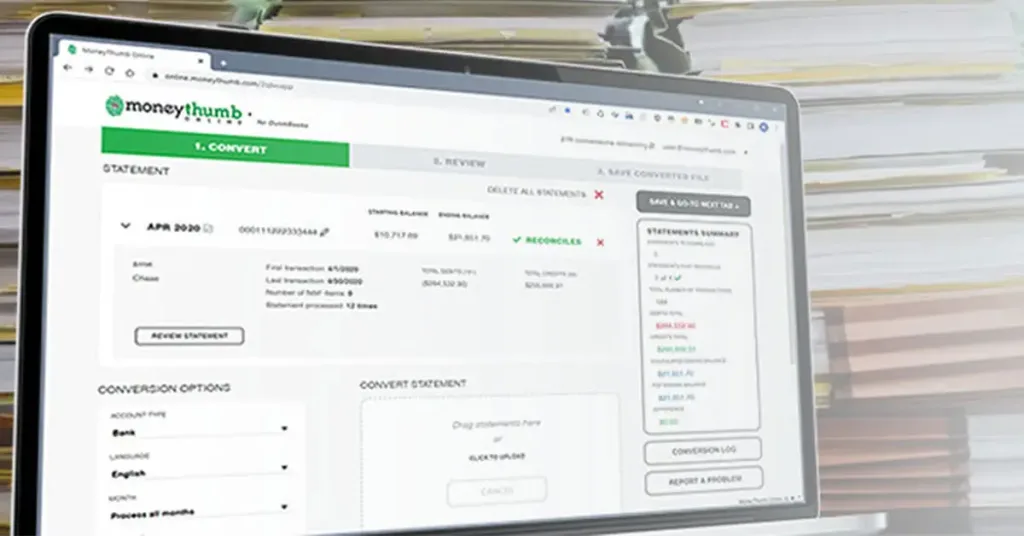
MoneyThumb addresses these challenges by converting bank statement PDFs into standardized, structured financial data that is easier to review. Instead of relying on manual entry, ISOs can extract transaction-level information directly from statements, reducing errors and presenting lenders with cleaner application files.
This approach offers several practical benefits:
- Extracts transactions from PDF bank statements
- Organizes financial information into Excel and other usable formats
- Reduces manual typing errors
- Improves consistency across multiple merchant applications
- Helps funding teams review complete financial records more efficiently
- Supports faster communication between ISOs and funding partners
Cleaner submissions generally result in fewer requests for additional documentation and smoother underwriting workflows.
MoneyThumb's Pre-Screening Services for MCA Funding
Submitting every merchant application directly to lenders wastes valuable time if obvious funding issues already exist. Pre-screening allows ISOs to identify potential concerns before formal underwriting begins.
MoneyThumb supports this process by helping organizations analyze banking data before applications reach funding partners. Extracted transaction data makes it easier to evaluate cash flow trends, recurring expenses, deposit consistency, and overall funding readiness.
Instead of reviewing hundreds of PDF pages manually, teams can work with structured financial data to identify merchants who are better prepared for approval. This improves operational efficiency while reducing unnecessary underwriting submissions.
Improving Funding Readiness Before Submission
Many MCA applications are delayed because financial records contain issues that could have been identified earlier.
Examples include:
- Missing statement periods
- Large unexplained withdrawals
- Negative balance patterns
- Excessive overdraft fees
- Irregular deposit activity
- Duplicate documentation
- Incorrect account information
Using automated financial data extraction helps ISOs identify these issues before sending applications to lenders, allowing merchants to correct problems earlier in the funding process.
Standardizing Financial Data Across Multiple Merchants
Funding organizations frequently process hundreds or even thousands of applications each month. Every bank uses different statement layouts, making manual review inefficient.
MoneyThumb standardizes extracted financial information into consistent formats regardless of the originating bank.
This standardization helps organizations:
- Compare multiple merchants consistently
- Reduce reviewer training time
- Improve underwriting efficiency
- Generate standardized financial reports
- Integrate extracted data into internal workflows
- Support larger funding volumes without proportional staffing increases
Standardized financial information also improves reporting and portfolio analysis.
AI Is Changing Cash Flow Analysis in 2025
Artificial intelligence continues to improve underwriting across the financial services industry. Rather than replacing underwriters, AI assists by reviewing large amounts of transaction data much faster than manual processes.
Modern AI systems can identify:
- Cash flow trends
- Seasonal revenue patterns
- Deposit consistency
- Spending categories
- Business stability indicators
- Revenue concentration risks
- Potential fraud signals
- Financial anomalies
This allows underwriting teams to focus on higher-level funding decisions instead of manually reviewing every transaction.
AI also helps funding companies process increasing application volumes while maintaining consistent evaluation standards.
Faster Underwriting for SMB Loans
Traditional lenders often struggle to compete with fintech companies because manual document review consumes significant time.
Several technologies now help accelerate underwriting, including:
- Automated PDF statement extraction
- AI transaction categorization
- Digital document verification
- Automated cash flow summaries
- Fraud detection systems
- Workflow automation
- Financial data standardization
MoneyThumb contributes by converting unstructured bank statements into usable financial datasets that lenders can analyze much faster than manually reviewing PDFs.
Reducing document preparation time helps shorten the overall underwriting process.
Closing the Speed Gap Between Traditional Lenders and Fintechs
Fintech companies have raised expectations for funding speed. Businesses increasingly expect financing decisions within days instead of weeks.
Traditional lenders can improve turnaround times by modernizing document processing rather than relying solely on manual reviews.
Some effective strategies include:
- Automating bank statement extraction
- Standardizing financial data
- Using AI-assisted cash flow analysis
- Digitizing underwriting workflows
- Automating fraud detection
- Reducing manual document validation
These improvements allow lenders to process more applications without sacrificing review quality.
MoneyThumb's Core Offering for Better ISO-Funder Relationships
Strong relationships between ISOs and funding partners depend on accurate, complete, and organized application packages.
MoneyThumb focuses on improving this exchange by helping ISOs deliver standardized financial information instead of inconsistent PDF documents.
Its solutions support:
- Faster document preparation
- Better financial transparency
- Improved data consistency
- Reduced underwriting delays
- Cleaner funding submissions
- More efficient lender communication
When underwriters spend less time correcting documentation issues, the funding process becomes smoother for everyone involved.
Extracting Cash Flow Data from PDF Bank Statements
PDF bank statements remain one of the biggest obstacles in financial document processing because they are designed for human reading rather than automated analysis.
MoneyThumb specializes in extracting transaction-level financial information from PDF statements into structured formats such as Excel. This allows financial institutions to work directly with transaction data instead of manually copying information.
Extracted information typically includes:
- Transaction dates
- Deposit amounts
- Withdrawals
- Running balances
- Descriptions
- Merchant information
Once extracted, the data becomes significantly easier to analyze, summarize, and integrate into underwriting systems.
Detecting Fraud with Thumbprint
Fraud remains a significant concern in merchant cash advance underwriting. Altered bank statements, manipulated PDFs, and modified financial documents can expose lenders to unnecessary risk.
MoneyThumb's Thumbprint fraud analysis solution helps identify signs that a PDF bank statement may have been altered. Rather than relying solely on visual inspection, Thumbprint analyzes document characteristics that may indicate manipulation or inconsistencies.
Potential areas of review include:
- PDF modification indicators
- Metadata inconsistencies
- Formatting anomalies
- Structural irregularities
- Signs of document alteration
This additional layer of document analysis helps underwriting teams evaluate financial records with greater confidence while supporting fraud prevention efforts.
Best Practices for Businesses Applying for an MCA
Businesses can improve approval chances by preparing financial records before applying.
Good preparation includes:
- Maintaining accurate bookkeeping
- Providing complete bank statements
- Explaining unusual transactions
- Reducing overdraft activity where possible
- Keeping business accounts separate from personal accounts
- Responding quickly to documentation requests
- Maintaining consistent deposits
Well-organized financial records often lead to faster underwriting decisions.
Is a Merchant Cash Advance Right for Your Business?
Merchant cash advances work best for businesses with healthy revenue that need quick access to working capital. Restaurants, retailers, service companies, eCommerce sellers, healthcare providers, contractors, and hospitality businesses commonly use this type of financing.
However, businesses should carefully evaluate repayment costs, expected cash flow, and alternative financing options before accepting an advance.
Understanding repayment terms and funding requirements helps business owners choose financing that supports long-term growth.
Frequently Asked Questions
How quickly can a merchant cash advance be approved?
Many MCA providers issue decisions within one to three business days when complete financial documentation is available.
Why are bank statements so important for MCA underwriting?
Bank statements show actual business cash flow, revenue consistency, spending patterns, and repayment capacity, making them one of the primary underwriting documents.
Can MoneyThumb extract data from PDF bank statements?
Yes. MoneyThumb specializes in extracting transaction-level financial data from PDF bank statements into structured formats that are easier to analyze and review.
What is Thumbprint?
Thumbprint is MoneyThumb's fraud analysis solution that helps identify potential alterations or inconsistencies within PDF financial documents used during underwriting.
Conclusion
Merchant cash advances continue to provide an important financing option for businesses that need quick working capital. As underwriting becomes increasingly data-driven, accurate financial documentation plays a larger role in funding decisions than ever before. Automated PDF data extraction, standardized financial reporting, AI-assisted cash flow analysis, and fraud detection tools are helping lenders and Independent Sales Organizations process applications more efficiently while reducing manual work. MoneyThumb supports this process by converting complex bank statements into structured financial data and providing fraud analysis through Thumbprint, helping ISOs submit cleaner files, improve funding readiness, and strengthen relationships with lending partners.
References
- https://www.moneythumb.com/blog/understanding-merchant-cash-advances-for-business/
- https://www.moneythumb.com/
- https://www.moneythumb.com/products/pdf-data-extraction/
- https://www.moneythumb.com/products/thumbprint/
- https://www.sba.gov/business-guide/plan-your-business/fund-your-business
- https://www.consumerfinance.gov/
- https://www.federalreserve.gov/
- https://www.investopedia.com/merchant-cash-advance-5071278
- https://www.forbes.com/advisor/business/


















Add comment