

Successful MCA brokers do five things consistently: pre-screen merchant cash flow, verify every financial document, match each deal to current funder criteria, submit a complete and organized package, and communicate honestly from application through renewal. These practices reduce avoidable stipulations, protect funder relationships, and give qualified merchants a clearer path to funding. Over many submissions, that consistency becomes part of the broker’s reputation. Funders learn which brokers send realistic opportunities and which ones simply circulate PDFs.In this article you learn the 5 best practices for successful MCA Brokers.
What Separates Reliable MCA Brokers?
Merchant cash advance underwriting is driven mainly by recent business cash flow. Underwriters study bank statements for deposit volume, revenue consistency, average daily balances, NSFs, negative days, existing positions, and signs of altered documents. A broker who understands those signals before submitting becomes more useful to both the merchant and the funder. A broker who forwards every file without review creates rework and weakens trust.
The Five Practices at a Glance
| Best practice | What the broker does | Main business result |
| Pre-screen cash flow | Reviews revenue, balances, NSFs, negative days, and existing positions | Fewer obvious declines |
| Verify documents | Confirms completeness, ownership, readability, and authenticity | Less fraud exposure and rework |
| Match funder criteria | Compares each file with a current underwriting matrix | Better placement accuracy |
| Standardize submissions | Sends a complete package with a short deal summary | Quicker first review |
| Communicate and learn | Explains terms, tracks feedback, and updates criteria | Stronger merchant and funder relationships |
Why MCA File Quality Matters More Than Submission Volume
MCA funding moves quickly, but speed without accuracy only sends a weak file to underwriting sooner. B2 Systems estimates that manual review can take 30 to 45 minutes per submission, much of it spent reading statements and matching a merchant to funder rules. When files arrive incomplete or go to the wrong funder, that work produces no offer.
Clean files carry a different signal. They tell the funder that the broker has checked basic eligibility, disclosed current obligations, and respected the underwriting team’s time.
1. Pre-Screen Merchant Cash Flow Before Submission
The first best practice is simple: underwrite the obvious facts before asking a funder to do it. Pre-screening is not a final credit decision. It is a controlled review that identifies whether the merchant appears to fit at least one program and whether more information is needed.
The process starts with recent business bank statements, usually three to six months depending on the funder. A complete review should cover revenue, deposit behavior, ending and average daily balances, NSFs, negative-balance days, existing MCA debits, and unusual transfers. The findings should be written in a standard worksheet or recorded in the deal system.
Calculate True External Revenue, Not Just Gross Deposits
Gross deposits can overstate operating revenue. Transfers between a merchant’s own accounts, prior advance proceeds, tax refunds, owner injections, and one-time credits may all appear as deposits without representing customer sales. A broker should separate likely external business revenue from internal transfers and nonrecurring inflows.
Consistency matters alongside the average. A merchant receiving about $60,000 every month presents a different risk pattern from one moving between $20,000 and $100,000. The average may look similar, but the second file has more volatility. MetrikData’s MCA underwriting guide explains why external revenue, recurring deposits, and existing payment burden are core review points.
Review the Signals That Change Funder Fit
Top ISOs do not treat every NSF or negative day as an automatic decline. They look at frequency, timing, cause, and trend. One difficult week caused by a delayed receivable is not the same as repeated overdrafts across several statement periods. The same reasoning applies to falling balances, declining deposits, returned payments, and large unexplained withdrawals. Existing positions also matter. The broker should identify recurring funder debits, estimate the current payment burden, and obtain payoff information when needed.
Record Exceptions Before They Become Stipulations
If a statement shows an unusual deposit, negative balance, transfer, or returned debit, ask the merchant for an explanation before submission. Keep the answer factual and support it with a document when possible. A month-to-date statement, processor report, paid-off position letter, invoice, or account-transfer record may resolve the issue early.
This step prevents a common delay: the funder spots an exception, sends a question to the broker, the broker contacts the merchant, and the file sits idle. A short note supplied at intake lets the underwriter assess the exception during the first review instead of waiting for another email cycle.
2. Verify Every Bank Statement and Supporting Document
Pre-screening numbers are useful only when the source documents are complete and credible. Brokers should run two separate checks: a completeness check and an authenticity check. One cannot replace the other. A genuine statement may still be missing pages, while a well-formatted PDF may still have been altered.
Start by confirming the legal or DBA name, bank name, account number ending, statement period, page sequence, beginning balance, ending balance, and legibility. Make sure all requested months are present and that duplicate files have not been counted as separate periods. Scans, screenshots, cropped pages, and password-protected PDFs should be replaced when the funder requires original downloadable statements.
Use Document Verification Tools as an Early Control
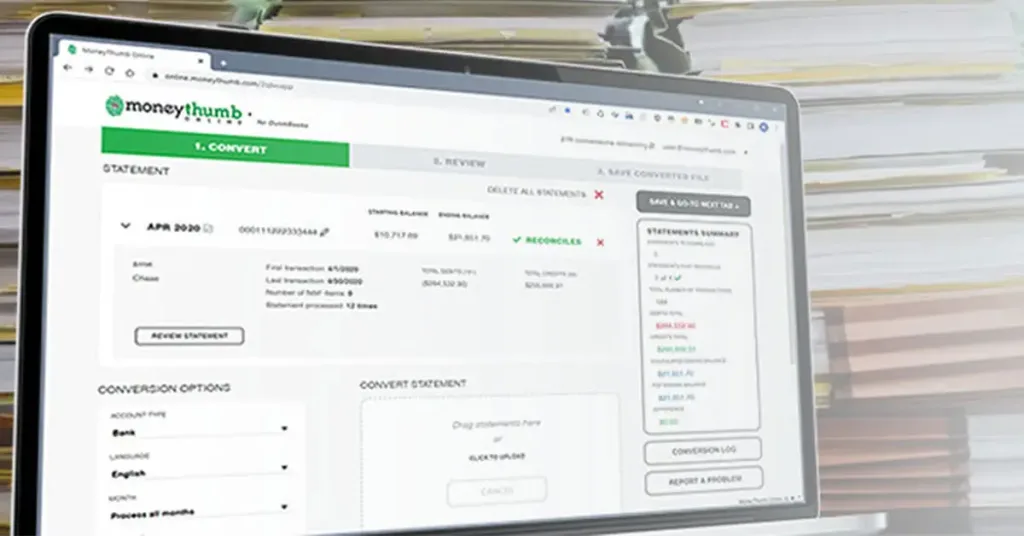
Document software can convert varied bank layouts into consistent transaction data, then flag items for review. MoneyThumb’s PDF tools extract transaction-level data and organize it into structured formats, helping ISOs compare merchant files without retyping every line. Its Thumbprint product checks PDF characteristics for possible tampering or inconsistency.
Treat a Fraud Flag as a Review Trigger, Not a Verdict
No verification tool proves that every unflagged statement is genuine, and a flag does not by itself prove fraud. PDF creation software, scanning, bank exports, and document assembly can create technical anomalies for innocent reasons. The broker needs a written escalation process.
When a file is flagged, request an original bank-portal download, a direct bank connection where permitted, or independent bank verification. Compare statement totals with transaction data and confirm account ownership. Never “clean up” a statement by editing content. If the evidence remains inconsistent, stop the submission and document why. MoneyThumb’s PDF validation guide describes the value of combining structured extraction with deeper PDF inspection.
3. Match Each Deal to Current Funder Criteria
A fundable merchant can still be declined when sent to the wrong program. Successful brokers maintain a current funder matrix rather than relying on memory. The matrix should show industries served, restricted states, minimum time in business, minimum monthly revenue, deposit-count rules, NSF tolerance, credit range, position limits, maximum amount, required documents, and preferred repayment structure.
Criteria change as funders adjust risk appetite, portfolio concentration, and capital availability. Date every update, name its source, and confirm borderline cases with the ISO manager before submission. A rule heard months ago should not decide today’s placement.
Avoid Shotgun Submissions
Sending the same file to every funder may appear to create more chances, but it often creates duplicated work, mixed messages, and unnecessary credit activity. It can also expose inconsistent merchant information if different versions of the application circulate. A focused submission to a few suitable funders is easier to track and defend.
Add a Short Placement Memo
A useful submission memo gives the underwriter context without retelling the entire application. State the merchant’s industry, time in business, average verified monthly revenue, requested amount, use of funds, existing positions, and any material exception. Then explain briefly why the file fits that funder’s program.
Keep the memo factual. Do not describe a file as “clean” when it contains repeated NSFs, hidden positions, or falling revenue. Disclosing a manageable weakness does not always kill a deal; hiding it can damage the relationship when the underwriter finds it. Accurate placement notes help the funder start with the real risk question.
4. Send Complete, Standardized, and Traceable Packages
A clean MCA package is complete, easy to review, and tied to one version of the deal. At minimum, most submissions include a signed application and recent business bank statements. Depending on the merchant and funder, the package may also need identification, a voided business check, month-to-date activity, card-processing statements, proof of ownership, current balance or payoff letters, and other stipulations.
The broker should use a funder-specific checklist because a generic checklist can still miss program requirements. This includes keeping the application, statements, and supporting documents together so the funder receives one organized package.
Use Clear File Names and Version Control
File names should identify the merchant, document type, and period without exposing more sensitive data than needed. For example, “Harbor_Cafe_Bank_Statements_Mar-May_2026.pdf” is clearer than “scan004-final-new.pdf.” Store the original file, the extracted data, and the review notes under the same deal record.
When a merchant sends a revised application or newer statement, mark the old item as superseded instead of leaving both versions unexplained. Record who changed the file, when it changed, and why. Traceability prevents a processor from sending one revenue figure while a sales representative quotes another.
Measure Rework, Not Just Submissions
Raw submission count can reward poor behavior. Better operating measures include first-pass completeness, average stipulation requests per file, time from complete intake to first response, approval rate by funder, funded rate by funder, decline reason, and renewal performance. These figures show whether the team is sending better deals or merely sending more of them.
Review the data each month. If one funder repeatedly declines files for position count, update its matrix. If missing pages cause most follow-ups, change the intake form. If a salesperson’s files produce more authenticity flags, audit that source. Each repeated problem should result in one practical process change.
5. Communicate Honestly and Build Long-Term Relationships
Strong MCA brokerage is not limited to document processing. Brokers must explain the product in plain language and avoid promises they cannot support. Merchants need to understand the funding amount, purchased amount, factor or total repayment, payment frequency, expected payment amount, estimated term, fees, reconciliation rights, personal guarantee language, and possible UCC filing before accepting an offer.
Put key explanations in writing and keep a record of the offer presented. Do not describe an estimated approval as guaranteed funding. Do not hide existing positions from a new funder or send applications without the merchant’s knowledge. Clear communication reduces disputes and gives funders confidence in the broker’s conduct.
Make Compliance Part of the Sales Process
Compliance requirements vary by transaction, state, company role, and agreement structure. California requires covered commercial-financing providers to give specified disclosures when presenting an offer. New York requires standardized disclosures for covered commercial financing up to $2.5 million. The FTC says its authority over unfair or deceptive practices reaches finance providers, marketers, ISOs, brokers, lead generators, servicers, and collectors.
The CFPB’s May 2026 rule excluded MCAs from its Section 1071 reporting rule, but that change did not erase other federal or state duties. Brokers should use current legal guidance, approved scripts, secure data handling, documented merchant consent, and regular staff training. This article is operational guidance, not legal advice.
Use Funder Feedback to Improve Future Files
A decline should become structured information. Log the reason, confirm whether it was a hard policy rule or a judgment call, and update the funder matrix if needed. Ask funder representatives what a resubmission would require, but do not keep pressing a file that clearly falls outside the program.
Regular, useful communication matters more than constant contact. Send complete information, answer questions promptly, disclose material changes, and avoid sending the same unsupported request repeatedly. Over time, funders learn that the broker’s summaries match the underlying documents. That credibility can lead to quicker review, clearer feedback, and better renewal coordination.
A Practical 30-Day Plan for MCA Broker Teams
Improving file quality does not require rebuilding the whole brokerage at once. Start with one common standard, test it on real deals, and correct the largest source of rework first. The aim is to make the right action easy for salespeople, processors, and managers to repeat.
Four-Week Implementation Schedule
| Time | Main task | Deliverable |
| Week 1 | Review recent approvals, declines, and stipulation requests | Funder matrix and top decline-reason list |
| Week 2 | Standardize intake and document checks | Merchant checklist and exception form |
| Week 3 | Add statement extraction and authenticity review | Written verification and escalation process |
| Week 4 | Review results with funder contacts | Updated criteria, scripts, and team scorecard |
What to Measure After 30 Days
After 30 days, compare first-pass completeness, stipulation count, response time, approval rate, and funded rate with the prior month. A small rise in first-pass completeness can be more valuable than a large rise in raw submissions because it removes repeated work from both sides of the deal.
Final Takeaway
The best practices for successful MCA brokers all point to one idea: quality creates trust. Pre-screen cash flow, verify source documents, disclose existing obligations, match the merchant to current criteria, and send one complete package with a factual summary. Then explain terms honestly and use every decline or stipulation to improve the next submission.
Technology helps by extracting data, checking PDFs, applying rules, and keeping files organized. It does not replace broker judgment or responsibility. The brokers who become dependable funding partners are those whose summaries match the statements, whose files fit the program, and whose merchants understand what they are accepting.
Frequently Asked Questions
What documents should an MCA broker collect before submission?
Most funders ask for a completed application and three to six months of business bank statements. They may also require identification, a voided check, month-to-date activity, card-processing statements, ownership records, and payoff details for existing positions. The exact checklist must come from the selected funder.
How do top MCA brokers pre-screen merchant cash flow?
They calculate verified external revenue, review deposit consistency, count NSFs and negative days, study average balances, identify existing MCA payments, and compare total payment burden with current funder rules. They also explain material exceptions before sending the file.
Can document verification software guarantee that a bank statement is genuine?
No. It can identify missing data, suspicious PDF characteristics, structural inconsistencies, and possible edits, but it cannot guarantee authenticity in every case. A flagged file needs independent review, such as an original bank download, a permitted bank connection, or direct verification.
Why do cleaner MCA submissions improve funder relationships?
Cleaner submissions reduce missing-document requests, duplicated review, and avoidable declines. They also show that the broker understands the funder’s criteria and discloses material risks. When that pattern stays consistent, the funder can review the broker’s files with greater confidence.
References
- https://onyxiq.com/blog/best-practices-mca-brokers
- https://onyxiq.com/platform/for-mca
- https://onyxiq.com/blog/best-mca-software-platforms
- https://www.moneythumb.com/blog/understanding-merchant-cash-advances-for-business/
- https://www.moneythumb.com/blog/bank-statement-pdf-validation-guide-how-to-stop-loan-fraud-before-it-happens/
- https://b2systems.io/broker-dashboard
- https://b2systems.io/funder-submissions
- https://commercialfinancereferrals.com/how-to-place-mca-deals
- https://www.ftc.gov/business-guidance/blog/2020/02/small-business-financing-staff-perspective-outlines-issues
- https://www.consumerfinance.gov/1071-rule/
















Add comment