

What Is a Merchant Cash Advance?
An MCA is generally structured around the purchase of future business receivables rather than a conventional term loan. The business receives a lump sum, while the provider collects an agreed portion of future sales or income until the purchased amount has been delivered.
The Consumer Financial Protection Bureau describes an MCA as an agreement where a small business receives a lump-sum payment in exchange for the right to receive a percentage of future sales or income up to a ceiling amount. The exact legal treatment can still depend on the agreement and jurisdiction.
How Does an MCA Work?
Three numbers usually matter most: the advance amount, the factor rate or purchased amount, and the payment or holdback structure. Suppose a merchant receives $50,000 with a 1.35 factor. The total payback would be $67,500.
If collections average $9,000 per month, the payback would take about seven and a half months, assuming sales remain similar. A factor rate should not be read as an APR because it does not account for time in the same way an annual percentage rate does. Advance Funds Network also describes advance amount, payback amount, factor rate, and holdback as core parts of an MCA agreement.
Why SMBs Use Merchant Cash Advances
MCAs are often considered when a business needs working capital sooner than a conventional bank process may allow, has uneven revenue, lacks suitable collateral, or does not fit standard credit requirements.
Market providers commonly advertise funding decisions within hours or a few days, although actual timing depends on the provider, file quality, requested amount, and verification steps. Allstate Fund Pros, for example, describes funding timelines that may range from about 24 to 72 hours for qualifying applicants. The tradeoff is cost, since an MCA can be more expensive than many conventional financing options.
What Do MCA Funders Review?
Recent cash flow is central to MCA underwriting. A funder may look beyond gross deposits because not every deposit represents operating revenue. Transfers, prior financing proceeds, tax refunds, and owner injections can make inflows look stronger than recurring customer sales.
Existing payment obligations also matter because a merchant may show healthy revenue while already carrying several daily or weekly debits. MoneyThumb's recent MCA guidance identifies revenue, balances, NSFs, negative days, existing positions, and document integrity among important file-review signals.
| Underwriting area | What the reviewer wants to understand |
| Monthly revenue | Whether sales can support the requested advance |
| Average daily balance | How much cash cushion the account normally carries |
| NSFs and overdrafts | Whether liquidity stress is frequent or occasional |
| Negative days | How often the account falls below zero |
| Deposit consistency | Whether revenue is stable, seasonal, or falling |
| Existing MCA payments | How much payment pressure already exists |
| Transfers | Whether deposits include non-operating inflows |
| Document integrity | Whether statements appear altered or fabricated |
What Does “Fundability” Mean in an MCA File?
There is no single universal MCA fundability score used by every provider. In practice, fundability means how closely a merchant fits a specific funder’s rules and risk limits.
A file can look suitable for one funder and still fall outside another program because minimum revenue, industry appetite, state coverage, time in business, existing positions, credit policies, or NSF tolerance may differ. Brokers should therefore treat fundability as a match between verified financial facts and current funder criteria rather than one generic score.
Can MoneyThumb Improve an MCA Application’s Fundability?
MoneyThumb can improve the quality of information used to assess fundability, but it cannot create stronger sales, repair weak cash flow, or guarantee approval.
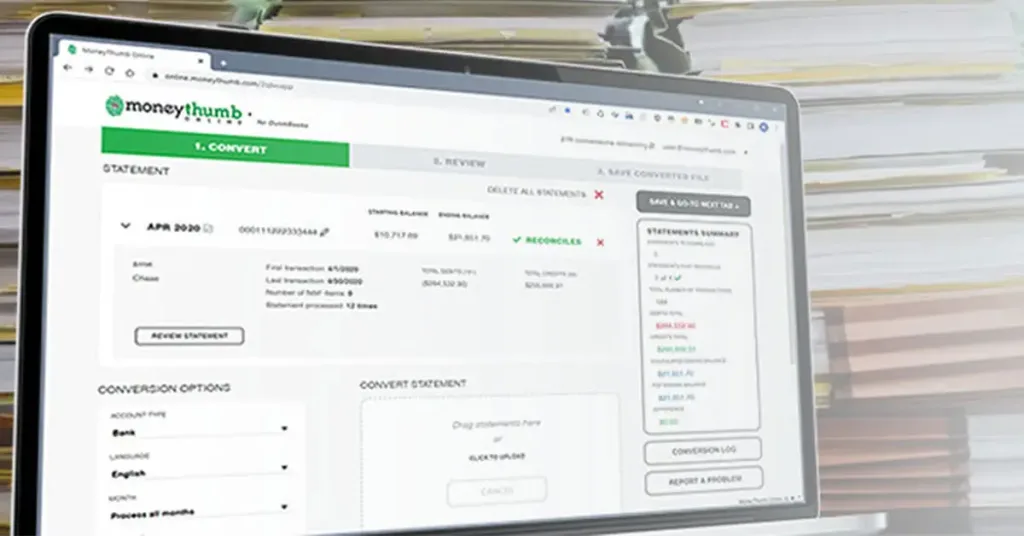
Its current platform turns bank statements and related financial files into structured cash-flow information and scorecards, while Thumbprint checks PDFs for signs of document alteration. MoneyThumb also offers application-field extraction and cross-verification between application details and financial records. This can help brokers find problems earlier and avoid preventable issues caused by incomplete or inconsistent files.
Can MoneyThumb Simplify MCA Pre-Screening?
Yes, particularly when teams still read statements manually and enter transaction data by hand. MoneyThumb says PDF Insights can identify figures such as average monthly revenue and expenses, average daily balance, negative days, NSFs, overdrafts, repeating payments, transfers, and what it classifies as true revenue.
Its current documentation also describes transaction categorization and customizable underwriting scorecards. For an ISO or funder, that means the first review can begin with organized financial information rather than several months of raw bank-statement pages.
How MoneyThumb Can Shorten Underwriting Review
The largest time savings usually come from reducing repetitive preparation work rather than replacing the underwriter. MoneyThumb's Loan Applications product can extract details such as business name, ownership percentage, requested advance, and other application fields.
The system can then cross-check information with submitted financial data and send structured output into the lender's workflow or system of record. When the intake package is complete, underwriting staff can spend more time examining exceptions, policy questions, merchant risk, and final decision criteria.
Why Document Verification Matters in MCA Funding
Funding speed creates additional risk when a funder relies on statements without checking whether they are authentic. MoneyThumb's Thumbprint documentation says its system looks for signals such as altered balances, duplicated transaction lines, inconsistent fonts, and formatting anomalies.
Its current documentation uses a scale from -1 to 1,000. A -1 means the file cannot be scored, while 1,000 indicates direct evidence of editing. MoneyThumb also states that Thumbprint checks document authenticity rather than providing a complete fraud or credit decision, so unusual results still require other verification and human review.
How Brokers Can Pre-Screen Files Before Submission
A good pre-screen starts with the same facts the funder is likely to examine. Brokers should review recent statements, separate likely operating revenue from transfers, note NSFs and negative days, identify recurring finance debits, compare balances across months, and flag unusual deposits or withdrawals.
If an exception has a reasonable explanation, supporting documentation should be gathered before submission. This does not mean trying to make a weak file look stronger. It means presenting the merchant's actual financial position clearly enough for the funder to reach a useful first decision.
Better File Quality Can Strengthen Funder Relationships
Funder relationships are built partly on how much unnecessary work a submission creates. A complete file with consistent figures, readable statements, disclosed existing positions, and a short factual summary is easier to assess than a package with missing pages or conflicting numbers.
MoneyThumb's August 2026 MCA broker guidance recommends pre-screening merchant cash flow, checking financial documents, matching applications with current funder criteria, and sending complete packages. Consistent file quality can reduce repeated questions and help an ISO become a more dependable source of submissions.
What a Clean MCA Workflow Looks Like
A useful workflow begins when the merchant completes the application, not after the funder asks for missing records. Intake should capture business information, ownership, requested amount, intended use of funds, recent bank statements, and any required processing records.
The package can then be checked for completeness, bank-statement data can be standardized, existing obligations can be identified, and document-authenticity checks can be completed. The deal should then be compared with suitable funder criteria. The final submission should contain one current and consistent version of every document.
What Documents Are Commonly Required?
Requirements vary between providers, but many MCA applications require several months of business bank statements, identification, a completed application, and information about sales or payment processing.
Some providers may also ask for a voided business check, month-to-date activity, tax returns, profit-and-loss statements, ownership records, payoff information for current positions, or other supporting material. Advance Funds Network says providers commonly examine at least three months of transaction history, while Allstate Fund Pros lists bank statements and sales information among typical application documents.
MCA vs. Business Loan vs. Revenue-Based Financing
An MCA is only one form of business finance. Comparing structures matters because two products providing the same amount of capital may affect cash flow very differently. Revenue-based financing, for example, may use a share of broader monthly revenue, while an MCA often involves more frequent collections.
| Feature | Merchant cash advance | Traditional business loan | Revenue-based financing |
| Main payment basis | Future sales or receivables | Scheduled principal and interest | Percentage of revenue |
| Common frequency | Daily or weekly | Usually weekly or monthly | Often monthly |
| Pricing format | Factor/purchased amount and fees | Interest rate and fees | Revenue share and repayment cap |
| Main review focus | Recent sales and cash flow | Credit, history, cash flow, collateral | Revenue quality and business performance |
| Typical strength | Quicker access for qualifying merchants | Often lower cost for stronger applicants | Payments connected with revenue |
| Main concern | High effective cost and frequent payments | Slower process or stricter criteria | Can remain expensive over time |
How Quickly Can an MCA Be Approved?
The MCA market is known for short decision times, but same-day funding is never automatic. Allstate Fund Pros says qualified files may receive funding within roughly 24 to 72 hours, while Advance Funds Network says decisions can move quickly after required information has been submitted.
Missing statements, unexplained cash-flow problems, application inconsistencies, fraud warnings, or existing financing positions can slow the process. A complete file generally gives the underwriter fewer basic questions to resolve before considering an offer.
What Can Cause an MCA Application to Be Declined?
Revenue falling below a provider's minimum is one clear reason, but declines can involve several factors. Repeated NSFs, persistent negative balances, falling deposits, excessive current payment obligations, restricted industries, short time in business, unresolved credit problems, state restrictions, or questionable financial documents may affect the result.
A decline from one provider does not automatically mean the merchant cannot qualify elsewhere. Still, brokers should understand why the application was declined before sending the same deal to another funder. The goal should be accurate placement rather than distributing every application everywhere.
The Cost of an MCA Needs Careful Review
A factor rate makes total payback relatively easy to calculate, but it does not show annualized financing cost by itself. A $50,000 advance at a 1.35 factor requires $67,500 in total payback before any additional charges.
If the $17,500 financing cost is collected over a short period, the effective annualized cost can be far higher than simply interpreting the factor as “35 percent.” Merchants should compare total payback, fees, collection frequency, reconciliation provisions, and expected remaining cash after payments before signing an MCA agreement.
Why Cash Flow Matters More Than Revenue Alone
A merchant producing $100,000 in monthly deposits does not automatically have more repayment capacity than a merchant producing $70,000. Expenses, existing finance payments, negative days, account balances, and deposit volatility can completely change the risk profile.
This is one reason automated bank-statement analysis has become useful in MCA underwriting. MoneyThumb says PDF Insights can identify revenue, balances, NSFs, overdrafts, recurring transactions, transfers, and other cash-flow indicators instead of requiring reviewers to rely only on total deposits.
Existing MCA Positions Can Change the Decision
Existing positions deserve close attention because a merchant may already have substantial daily or weekly withdrawals leaving the business account. A new advance may look affordable when viewed against gross revenue but become difficult once all current payments are considered.
Brokers should identify recurring funder debits during pre-screening rather than waiting for the underwriter to find them. Current balances, payoff information, and payment frequency may also be needed. Clear disclosure helps the funder judge the actual payment burden and prevents major inconsistencies later in the review.
Why “True Revenue” Matters in Bank Statement Analysis
Gross deposits can overstate business performance. Imagine a company receives $80,000 in total deposits during one month, but $20,000 consists of transfers between its own accounts and another $10,000 comes from prior financing. Treating all $80,000 as customer revenue would give a misleading view of operating cash flow.
Statement analysis therefore needs to separate recurring external business income from internal transfers and other non-operating credits. MoneyThumb says PDF Insights identifies targeted transaction types and can distinguish what it classifies as true revenue from other deposits.
Why NSFs and Negative Days Need Context
One NSF does not tell the same story as repeated overdrafts across several months. Underwriters commonly look at frequency, timing, recent trends, and whether a negative balance appears to be an isolated event or part of a larger liquidity problem.
The same principle applies to falling ending balances. A temporary low balance caused by a large inventory purchase may deserve different treatment from steadily declining cash across several periods. Good pre-screening records these patterns before submission instead of leaving the funder to discover and question every exception.
When an MCA May Make Sense
An MCA may fit a business with reliable incoming sales, a short-term use for capital, and enough margin to absorb frequent collections. Examples can include purchasing inventory expected to sell quickly, handling a time-sensitive equipment repair, covering a temporary working-capital gap, or paying for an opportunity where the expected return comfortably exceeds the financing cost.
The business should also model a weaker-than-expected sales month. If one slow month would make the daily or weekly collections difficult to manage, the proposed advance may place too much pressure on working capital.
When an SMB Should Consider Other Options
A merchant with good credit, predictable finances, and enough time to wait may find a bank loan, SBA-backed product, business line of credit, equipment financing, invoice financing, or another structure less expensive.
Revenue-based financing may also be worth comparing when payments are linked to broader revenue and the repayment cap is clearly stated. AltLINE notes that MCA collections are commonly tied to daily or weekly sales, while revenue-based financing generally uses a share of broader business revenue. The right choice depends on cost, urgency, eligibility, use of funds, and payment pressure.
The Bottom Line for Brokers, Funders, and SMBs
The strongest MCA process starts with verified cash flow and a complete financial file. Merchants need to understand the total payback and its effect on working capital. Brokers need to pre-screen applications honestly and match each merchant with appropriate funder rules. Funders need consistent data and reliable document checks.
MoneyThumb can support this process through bank-statement analysis, application extraction, underwriting scorecards, structured output, and PDF authenticity checks. It can make a well-prepared file easier to assess, but the final funding decision still belongs to the funder.
Frequently Asked Questions
Can MoneyThumb help improve my MCA fundability score?
MoneyThumb can help identify cash-flow, documentation, and authenticity issues that may affect how a file is reviewed. It cannot create revenue, repair weak finances, or guarantee approval.
Can MoneyThumb replace an MCA underwriter?
No. It can automate statement extraction, scorecard preparation, application-field extraction, and PDF authenticity checks. Human underwriting is still needed for policy decisions, exceptions, merchant context, and final approval.
How many months of bank statements are usually needed for an MCA?
Many providers ask for roughly three to six months of business bank statements, although requirements vary by provider, amount, industry, and merchant profile. Additional month-to-date records may also be requested.
Does a clean MCA file guarantee faster funding?
No, but it can remove common causes of delay. Complete statements, consistent application data, disclosed existing positions, and clear explanations for unusual transactions can reduce unnecessary follow-up questions.
References
- https://advancefundsnetwork.com/guide/the-afn-guide-to-merchant-cash-advances/
- https://advancepointcap.com/blog/application-for-merchant-cash-advance/
- https://advantagemca.com/
- https://allstatefundpros.com/merchant-cash-advance-approval-speed/
- https://altline.sobanco.com/mca-vs-revenue-based-financing/
- https://www.moneythumb.com/mca/
- https://www.moneythumb.com/moneythumb-online-pdf-insights/
- https://docs.moneythumb.com/welcome/thumbprint/
- https://www.moneythumb.com/loan-applications/
- https://www.moneythumb.com/blog/closing-with-confidence-five-habits-of-high-performing-mca-brokers/
















Add comment