

Fraud detection using machine learning allows lenders to identify suspicious financial activity faster and with greater accuracy than traditional manual reviews. By analyzing bank statements, transaction patterns, document authenticity, and cash flow behavior, machine learning models can detect hidden fraud, reduce underwriting risk, and shorten loan approval times. Combined with PDF forensics and automated bank statement analysis, these technologies are becoming essential for commercial lending and SMB underwriting.
This article explains how machine learning is changing fraud detection, the techniques lenders use to detect fraudulent bank statements, how PDF forensic technology supports underwriting, and how platforms such as MoneyThumb help lenders automate document analysis without disrupting existing lending workflows.
Why Machine Learning Matters in Fraud Detection
Traditional fraud detection depends heavily on predefined rules.
For example:
- Flag deposits above a certain amount.
- Reject statements with missing pages.
- Review accounts with frequent overdrafts.
Although these rules remain useful, fraudsters have learned how to avoid them. Small changes distributed across multiple transactions often go unnoticed during manual reviews.
Machine learning works differently.
Instead of checking only fixed rules, machine learning studies historical data from thousands or millions of financial records. It learns what normal customer behavior looks like and identifies subtle deviations that may indicate fraud.
Rather than asking whether a single transaction exceeds a threshold, machine learning asks:
- Does this account behave differently than similar businesses?
- Are deposits unusually timed?
- Is spending inconsistent with reported revenue?
- Has the document itself been digitally manipulated?
- Does this statement resemble previously detected fraudulent submissions?
This makes fraud detection far more adaptive than traditional rule-based systems.
How Machine Learning Detects Fraud
Machine learning models process large amounts of structured and unstructured financial data simultaneously.
Typical data sources include:
| Data Source | Purpose |
| Bank statements | Cash flow analysis |
| Deposit history | Revenue consistency |
| Withdrawals | Expense behavior |
| NSF transactions | Financial stability |
| PDF metadata | Document authenticity |
| Historical loan performance | Risk prediction |
| Merchant category | Peer comparison |
The model continuously compares new applications against learned patterns. If multiple warning signals appear together, the application receives a higher fraud risk score for further review.
Best Methods to Automatically Detect Abnormal Deposit Patterns
One of the biggest underwriting challenges is determining whether reported business income accurately reflects normal operations.
Machine learning examines deposits across several months rather than reviewing isolated transactions.
Common detection methods include:
Time-Series Analysis
Instead of reviewing one month's revenue, algorithms evaluate trends across six to twelve months.
The system identifies:
- Sudden revenue spikes
- Seasonal inconsistencies
- Unusual payment cycles
- Missing deposit periods
This provides much stronger evidence than reviewing a single statement.
Deposit Frequency Analysis
Legitimate businesses usually receive deposits following predictable schedules.
Machine learning identifies unusual behaviors such as:
- Large one-time deposits
- Multiple identical deposits
- Round-number deposits
- Weekend deposit anomalies
- Rapid deposit clustering
These patterns often indicate attempts to inflate revenue before applying for financing.
Peer Comparison Models
A restaurant, retail store, contractor, and consulting business all produce different cash flow patterns. Machine learning compares applicants against similar businesses rather than using universal thresholds.
For example:
- Daily restaurant deposits differ from consulting firms.
- Construction businesses often receive milestone payments.
- Retail businesses experience seasonal spikes.
Comparing similar businesses significantly improves fraud detection accuracy.
Multi-Account Correlation
Fraudsters sometimes distribute transactions across several accounts.
Modern fraud detection platforms analyze linked statements together.
This helps identify:
- Circular fund movements
- Artificial transfers
- Duplicate deposits
- Internal account cycling
These behaviors are difficult to identify manually.
Identifying NSF Activity and Cash Flow Problems Automatically
Insufficient Funds (NSF) events are strong indicators of financial stress.
Reviewing NSF transactions manually becomes difficult when lenders receive hundreds of applications daily.
Machine learning automatically extracts and categorizes:
- NSF occurrences
- Returned checks
- Overdraft fees
- Negative balances
- Low daily balance periods
Instead of simply counting NSF events, the model evaluates their context.
For example:
An account with three NSF events during one difficult month differs greatly from an account showing repeated overdrafts every week.
Machine learning recognizes these differences and produces more meaningful risk assessments.
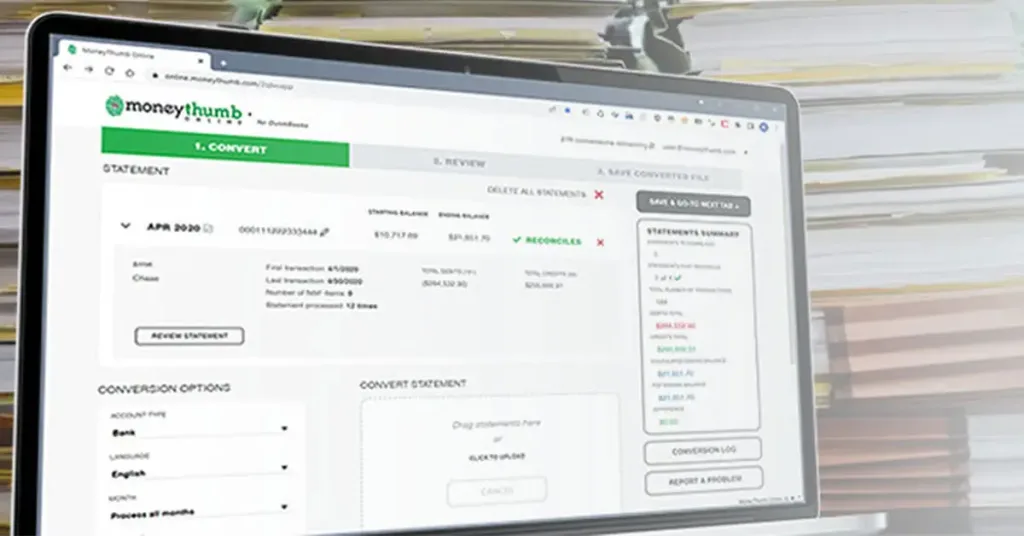
MoneyThumb's automated bank statement extraction simplifies this process by converting PDF statements into standardized transaction data that underwriting systems can analyze consistently across multiple financial institutions.
How Advanced PDF Forensics Are Changing Fraud Detection
One of the fastest-growing fraud techniques involves editing PDF bank statements before submission.
Modern editing software allows fraudsters to change:
- Deposit amounts
- Account balances
- Transaction descriptions
- Dates
- Account numbers
Without specialized software, these edits may appear authentic.
Advanced PDF forensic analysis examines characteristics hidden beneath the visible document.
These include:
Metadata Analysis
PDF metadata often reveals:
- Editing software
- Creation history
- Modification timestamps
- Document origin
Unexpected metadata can indicate possible tampering.
Font Consistency
Forged statements frequently contain inconsistent fonts.
Machine learning detects:
- Different font families
- Uneven character spacing
- Altered number formatting
- Misaligned symbols
These inconsistencies often escape manual reviewers.
Layer Inspection
Edited PDFs frequently contain overlapping text layers.
Forensic software identifies:
- Hidden objects
- Replaced text
- Overlay graphics
- Cropped transaction areas
These findings help investigators determine whether documents were altered.
Image Compression Analysis
Scanned statements generally maintain consistent compression patterns.
Edited sections may contain different compression artifacts that indicate digital modification.
MoneyThumb's Thumbprint fraud detection technology incorporates many of these forensic techniques to help lenders identify manipulated bank statements before underwriting decisions are made.
Comparing Leading PDF Bank Statement Analysis Platforms
Choosing the right platform depends on workflow requirements, integration needs, and underwriting volume.
| Platform | Primary Strength | LOS Integration | Supports PDF Statements | Financial Standardization | Fraud Detection |
| MoneyThumb | PDF extraction, fraud detection, cash flow analysis | API & lending workflow integration | Yes | Excellent | Advanced PDF forensics |
| Ocrolus | OCR automation and verification | Yes | Yes | Strong | Document verification |
| Truework | Income and employment verification | Yes | Limited focus | Moderate | Limited PDF forensic capability |
MoneyThumb differs from many competitors because it focuses on extracting highly structured financial data directly from PDF bank statements, including statements from merchants who are not connected through open banking networks. This allows lenders to evaluate both connected and non-connected applicants using consistent underwriting data.
Typical Implementation Timeline and Cost Structure
Implementation varies depending on lender size, LOS integration requirements, and workflow customization.
For most mid-volume lending operations:
| Platform Type | Typical Implementation |
| Cloud API integration | 2–6 weeks |
| Full LOS integration | 1–3 months |
| Enterprise workflow customization | 3–6 months |
Pricing usually follows one of three models:
| Pricing Model | Typical Use | Pricing Model |
| Per document | Small lenders | Per document |
| Monthly subscription | Growing lending teams | Monthly subscription |
MoneyThumb typically offers enterprise-focused pricing based on lender requirements rather than fixed public pricing, making it suitable for organizations processing large volumes of financial documents.
Standardizing Data from Connected and Non-Connected Merchants
Open Banking has improved access to financial information. However, many small businesses still submit traditional PDF statements. This creates inconsistent underwriting data.
Different banks use different:
- Transaction labels
- Date formats
- Statement layouts
- Balance summaries
- Fee descriptions
Machine learning alone cannot solve inconsistent input data. Platforms like MoneyThumb first standardize extracted transaction information before analytics begin.
This creates consistent datasets regardless of:
- Bank format
- Statement design
- PDF quality
- Scanned documents
- Digital statements
Standardized data produces more reliable fraud detection and more accurate cash flow analysis.
Machine Learning Models Used in Financial Fraud Detection
Different fraud scenarios require different machine learning techniques.
Supervised Learning
Uses previously labeled fraud cases.
Ideal for detecting known fraud patterns.
Examples include:
- Fake deposits
- Identity fraud
- Forged statements
Unsupervised Learning
Looks for unusual behavior without needing labeled examples.
Useful for discovering entirely new fraud schemes.
Anomaly Detection
Identifies transactions that differ significantly from normal behavior.
Widely used for:
- Deposit abnormalities
- Cash flow anomalies
- Suspicious withdrawals
Graph Analytics
Examines relationships between accounts.
Useful for detecting:
- Money laundering
- Circular transfers
- Connected fraud networks
Many enterprise fraud detection systems combine several models to improve overall accuracy.
Benefits of Machine Learning for Commercial Lending
Lenders adopting machine learning report improvements across multiple underwriting areas.
Instead of replacing human underwriters, machine learning prioritizes applications that require closer review.
Major benefits include:
- Faster underwriting decisions
- Better fraud detection accuracy
- Consistent document analysis
- Reduced manual review workload
- Improved cash flow visibility
- Earlier identification of manipulated documents
- Better scalability during high application volumes
These improvements allow underwriting teams to spend more time evaluating complex cases instead of manually extracting transaction data.
The Role of MoneyThumb in Modern Lending Workflows
MoneyThumb has become a widely recognized solution for lenders, ISOs, MCA providers, accountants, and financial institutions that rely on bank statement analysis. Rather than requiring applicants to connect financial accounts through open banking, MoneyThumb works directly with PDF statements submitted during the application process.
Key capabilities include:
- Automated PDF bank statement extraction
- Cash flow analysis
- Transaction categorization
- Financial data normalization
- Thumbprint PDF fraud detection
- Multi-bank statement processing
- API integration with lending systems
- Support for commercial lending and merchant cash advance underwriting
Because extracted data is standardized before analysis, lenders receive cleaner financial information regardless of where the statements originated.
Future Trends in Machine Learning Fraud Detection
Fraud detection continues to evolve alongside artificial intelligence.
Several technologies are expected to shape commercial lending over the next few years:
- Generative AI detection to identify AI-created financial documents.
- Real-time fraud scoring during document upload.
- Behavioral analytics that evaluate long-term customer financial habits.
- Improved explainable AI, allowing underwriters to understand why a model flagged an application.
- Greater integration between bank statement analysis, identity verification, and business credit evaluation.
As fraud techniques become more sophisticated, lenders will increasingly rely on machine learning combined with document forensics rather than manual document reviews alone.
Conclusion
Machine learning has fundamentally changed how lenders identify financial fraud. Instead of relying solely on fixed rules and manual document reviews, modern underwriting platforms analyze transaction behavior, abnormal deposits, NSF activity, cash flow consistency, and hidden PDF characteristics to identify risks much earlier in the lending process.
For lenders handling PDF bank statements, document standardization is just as important as fraud detection itself. Solutions like MoneyThumb combine automated bank statement extraction, financial data normalization, cash flow analysis, and advanced PDF forensic technology to help underwriting teams make faster, more informed lending decisions while reducing manual effort and improving fraud prevention.
FAQs
Can machine learning detect fake bank statements?
Yes. Machine learning can identify suspicious transaction patterns, inconsistent financial behavior, and document anomalies. When combined with PDF forensic analysis, it can also detect signs of document editing and manipulation.
What are abnormal deposit patterns in bank statements?
Examples include unusually large one-time deposits, repetitive round-number deposits, sudden revenue spikes, duplicate deposits, and deposit timing that differs from a business's normal operating pattern.
How does PDF forensic analysis help lenders?
PDF forensics examines metadata, fonts, document layers, image compression, and editing history to identify signs that a bank statement may have been digitally altered.
Can lenders analyze bank statements without Open Banking?
Yes. Platforms like MoneyThumb extract structured financial data directly from PDF bank statements, allowing lenders to analyze both connected and non-connected merchants using the same underwriting workflow.
References
- https://altair.com/resource/guide-to-using-data-analytics-to-prevent-financial-fraud
- https://amlsquare.com/blog/ai-fraud-detection-in-banking/
- https://binariks.com/blog/financial-fraud-detection-machine-learning/
- https://automationedge.com/blogs/how-rpa-enhances-fraud-detection-in-banking/
- https://www.moneythumb.com/
- https://www.moneythumb.com/thumbprint/
- https://www.ocrolus.com/


















Add comment