

Financial document processing has become one of the biggest operational challenges in modern lending. Whether a lender is reviewing SBA loans, merchant cash advances, business loans, or commercial financing applications, the quality of financial data directly affects underwriting decisions. The MoneyThumb Learning Center serves as an educational resource that helps lenders, underwriters, ISOs, accountants, and financial professionals understand document automation, bank statement analysis, fraud detection, and financial data extraction. As lending becomes more competitive, resources that explain these technologies can help organizations improve speed, accuracy, and risk management.
This combination of speed and accuracy has created demand for smarter financial document processing solutions. Educational resources that explain these technologies have become increasingly important for lending professionals looking to improve workflows while maintaining strong underwriting standards.
What Is the MoneyThumb Learning Center?
The MoneyThumb Learning Center is an educational resource designed to help professionals better understand financial document processing technologies and lending workflows.
Instead of focusing solely on software features, the Learning Center explores real-world challenges that lenders, underwriters, ISOs, accountants, and financial institutions face every day.
Topics commonly include:
- Bank statement analysis
- PDF conversion technologies
- Cash flow analysis
- Fraud detection methods
- Financial document automation
- Underwriting workflow improvements
- Merchant cash advance processing
- Lending technology trends
- Data extraction techniques
- Financial reporting solutions
For professionals working with financial documents daily, these educational materials provide practical insights into improving efficiency and reducing manual work.
Why Financial Document Processing Has Become More Important
Small business lending continues to grow more complex. Underwriters often receive financial documents from multiple institutions, formats, and reporting systems.
A single borrower may submit:
- PDF bank statements
- Scanned documents
- Image files
- Accounting reports
- Financial summaries
- Merchant processing statements
- Tax records
Reviewing these documents manually takes considerable time.
More importantly, manual review introduces several operational challenges:
| Challenge | Impact on Lending |
| Manual data entry | Slower underwriting |
| Human errors | Incorrect financial analysis |
| Inconsistent formats | Review delays |
| Fraud risks | Higher portfolio exposure |
| Missing data | Incomplete evaluations |
| Multiple file types | Workflow bottlenecks |
As lending volume increases, these issues become more difficult to manage using traditional methods alone.
How Financial Data Extraction Supports Lending Operations
One of the most discussed topics in modern underwriting is financial data extraction.
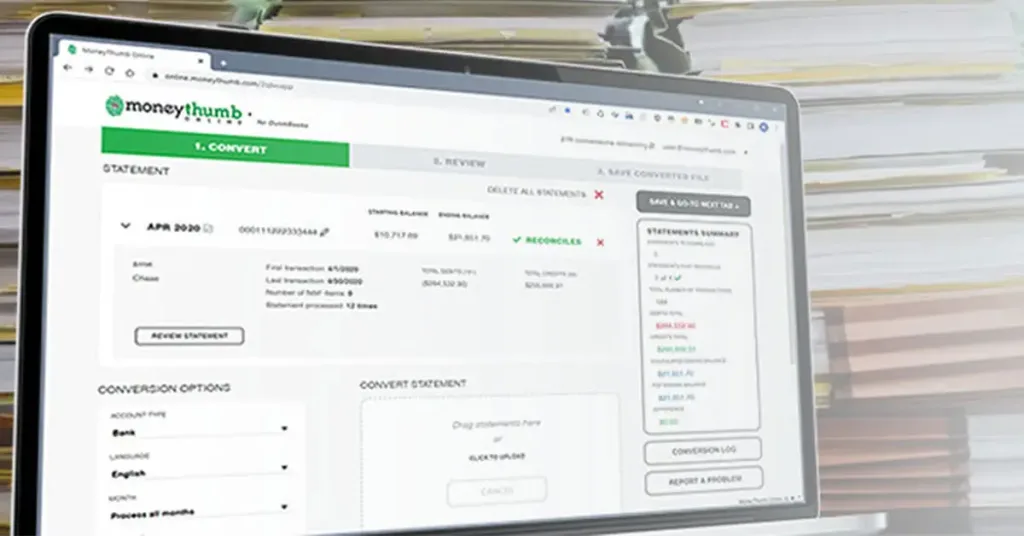
Financial data extraction refers to the process of converting information from statements, PDFs, and financial documents into structured data that can be analyzed more efficiently.
Traditionally, underwriters manually entered:
- Deposits
- Withdrawals
- Daily balances
- Revenue figures
- NSF occurrences
- Cash flow trends
This approach works for small volumes but becomes difficult to scale.
Modern extraction tools automate much of this process, helping underwriters focus on risk evaluation instead of repetitive administrative tasks.
The result is often:
- Faster reviews
- Better consistency
- Reduced human error
- Improved productivity
- More reliable financial analysis
Understanding Cash Flow Analysis in Lending
Cash flow remains one of the most important factors in small business underwriting.
Lenders want to understand whether a business generates enough income to support future repayment obligations.
While credit scores and collateral matter, cash flow frequently provides the clearest picture of financial health.
Underwriters typically examine:
Revenue Stability
Stable deposits indicate predictable business operations.
Large fluctuations may require additional review.
Average Daily Balances
Daily balances help reveal liquidity strength.
Low balances can indicate financial stress even when monthly deposits appear strong.
Deposit Frequency
Consistent deposits often suggest ongoing business activity.
Irregular deposits may require closer examination.
Negative Balance Activity
- Frequent negative balances can signal cash flow management problems.
- This information often influences approval decisions.
- The challenge is collecting and organizing all this data efficiently.
- That is why many lenders increasingly rely on document automation technologies.
How Different Bank Statement Formats Create Challenges
One overlooked issue in underwriting is statement format inconsistency.
Every financial institution generates statements differently.
Some use:
- Complex PDF layouts
- Multi-column formats
- Scanned images
- Custom transaction structures
- Unique date formats
This creates challenges for both manual reviewers and automated systems.
A document processing platform must accurately interpret information regardless of formatting differences.
One reason many lenders use specialized financial document software is the ability to standardize data across multiple bank statement layouts.
This standardization helps underwriters compare businesses more efficiently and reduces review inconsistencies.
Fraud Detection Is Becoming a Critical Priority
Financial fraud remains a major concern throughout the lending industry.
As editing software becomes more sophisticated, altered financial documents can appear authentic at first glance.
Traditional visual review methods are no longer sufficient in many situations.
Modern fraud detection focuses on identifying hidden inconsistencies that may not be visible to human reviewers.
Potential warning signs include:
- Metadata anomalies
- Transaction inconsistencies
- Formatting irregularities
- Artificial editing traces
- OCR regeneration artifacts
- Unusual document structures
- Inconsistent statement patterns
Detecting these issues early can help lenders reduce risk exposure significantly.
Understanding Thumbprint Fraud Analysis
One technology often discussed within lending operations is Thumbprint, a fraud analysis solution designed to evaluate financial documents for signs of manipulation.
The goal is not simply to identify obvious fraud.
Instead, the system looks for hidden indicators that may suggest a document has been altered or modified.
This additional layer of analysis helps underwriters:
- Review documents more efficiently
- Reduce fraud exposure
- Improve confidence in submitted files
- Identify inconsistencies earlier
- Support stronger lending decisions
As financial fraud techniques continue evolving, automated analysis tools are becoming increasingly valuable.
How Automated Analysis Helps Underwriting Teams
Underwriters face constant pressure to balance speed with accuracy.
Reviewing hundreds of pages of financial records manually can create bottlenecks throughout the lending process.
Automated analysis helps by organizing information into structured formats that are easier to evaluate.
Benefits often include:
| Underwriting Function | Potential Improvement |
| Statement review | Faster analysis |
| Data extraction | Reduced manual entry |
| Fraud detection | Earlier risk identification |
| Cash flow evaluation | Improved consistency |
| File organization | Better workflow efficiency |
| Financial reporting | Clearer borrower insights |
This allows underwriting teams to focus more on decision-making rather than document preparation.
Improving ISO-Funder Relationships Through Better Data
Independent Sales Organizations (ISOs) play a major role in merchant cash advance and alternative lending markets.
One challenge within these relationships involves file quality.
When submissions contain incomplete documents, inconsistent data, or unclear financial information, underwriting delays increase.
These delays affect:
- Funders
- ISOs
- Underwriters
- Merchants
Stronger document preparation creates smoother workflows for everyone involved.
Many successful funding organizations focus on improving file quality before submissions reach underwriting teams.
This reduces unnecessary back-and-forth communication and improves approval efficiency.
The Importance of Standardized Financial Data
Standardization is one of the most overlooked benefits of document automation.
Without standardization, lenders may review the same financial information differently depending on:
- Reviewer experience
- Statement format
- Institution source
- Reporting structure
Standardized data helps create consistency across underwriting teams.
Benefits include:
- More reliable analysis
- Better quality control
- Faster training
- Improved reporting
- Consistent approval standards
For organizations handling large application volumes, standardization becomes increasingly important.
Watermarking and Document Security
Financial documents contain highly sensitive information.
Protecting these records is critical for compliance, security, and operational integrity.
Watermarking features help organizations maintain control over documents during processing and review.
Common benefits include:
- Enhanced Security
Watermarks help identify document ownership and usage.
- Better Audit Trails
Teams can track document distribution more effectively.
- Reduced Unauthorized Sharing
Visible identifiers discourage improper document use.
- Improved Internal Controls
Organizations gain additional visibility over document handling procedures. While watermarking may seem like a simple feature, it can play an important role in document security strategies.
Why PDF Processing Remains a Major Challenge
PDF files continue to dominate financial document workflows.
Unfortunately, PDFs are not always easy to analyze.
Common problems include:
- Scanned images
- Locked files
- Non-searchable content
- Complex formatting
- Multiple page layouts
These issues make manual review time-consuming.
Document processing solutions address this challenge by converting PDFs into structured financial data that can be reviewed more efficiently.
This is particularly valuable in lending environments where large numbers of statements must be analyzed quickly.
How Lenders Use Document Automation to Compete
Fintech lenders have changed borrower expectations dramatically.
Businesses now expect:
- Faster decisions
- Simplified applications
- Rapid funding
- Digital workflows
Traditional lenders cannot always match fintech speed through staffing alone.
Instead, many organizations focus on workflow improvements.
Document automation supports these goals by reducing repetitive tasks throughout underwriting operations.
Common areas of improvement include:
- Data collection
- Statement analysis
- Fraud screening
- Financial reporting
- Application review
This allows institutions to improve turnaround times without compromising credit quality.
What Makes MoneyThumb Different in Financial Document Processing
One reason lenders frequently explore MoneyThumb solutions is the company's focus on financial document workflows.
Rather than providing generic document conversion tools, the platform focuses specifically on financial data extraction and analysis.
This specialized approach helps address challenges unique to lending, underwriting, accounting, and merchant funding environments.
Key focus areas include:
- Bank statement conversion
- Cash flow analysis
- Fraud detection
- PDF processing
- Financial data extraction
- Statement standardization
These capabilities support organizations that depend on accurate financial information for operational decisions.
How Modern Lending Teams Can Benefit From Learning Resources
Technology alone does not improve lending operations.
Teams must also understand how to use new tools effectively.
Educational resources help organizations:
- Train underwriters
- Improve workflows
- Understand fraud risks
- Evaluate automation opportunities
- Standardize procedures
- Increase operational efficiency
This is one reason learning centers and industry knowledge hubs continue gaining importance across financial services.
Organizations that combine technology with education often achieve better long-term results.
The Future of Financial Document Processing
Financial document processing will likely continue evolving rapidly during the coming years.
Several trends are already shaping the future:
- AI-assisted underwriting
- Advanced fraud detection
- Automated cash flow analysis
- Real-time financial verification
- Enhanced document authentication
- Faster lending workflows
As competition increases, lenders will continue looking for ways to improve speed while maintaining strong risk controls.
Document automation and financial data analysis technologies will likely play an increasingly important role in achieving that balance.
Final Thoughts
The MoneyThumb Learning Center provides valuable educational content for lenders, underwriters, ISOs, accountants, and financial professionals seeking to improve document processing and lending workflows. As financial institutions face growing pressure to accelerate approvals while managing risk, understanding modern technologies becomes increasingly important.
Topics such as bank statement analysis, PDF processing, fraud detection, cash flow evaluation, data standardization, and document security are no longer optional considerations. They are becoming core components of efficient lending operations.
Organizations that invest in both technology and education are often better positioned to reduce manual workloads, improve underwriting consistency, strengthen fraud detection, and create faster experiences for borrowers without sacrificing credit quality.
FAQs
What is the MoneyThumb Learning Center?
The MoneyThumb Learning Center is an educational resource that provides information about financial document processing, bank statement analysis, fraud detection, lending workflows, and document automation technologies.
How does MoneyThumb help with bank statement analysis?
MoneyThumb helps convert financial documents into structured data formats, making it easier for lenders, underwriters, and analysts to review deposits, balances, cash flow, and transaction activity.
What is Thumbprint fraud analysis?
Thumbprint is a fraud analysis tool designed to identify potential document inconsistencies and signs of manipulation within financial documents, helping lenders evaluate submissions more confidently.
Can document automation improve underwriting speed?
Yes. Document automation reduces manual data entry, organizes financial information more efficiently, and allows underwriters to focus on risk assessment rather than repetitive administrative tasks.
References
https://www.moneythumb.com/blog/moneythumb-learning-center/
https://www.moneythumb.com/products/
https://www.moneythumb.com/thumbprint/
https://www.moneythumb.com/pdf-converter/
https://www.moneythumb.com/blog/
https://www.consumerfinance.gov
https://www.fedsmallbusiness.org
















Add comment